Sunday, 4 June 2017

Rifleman Radio is indispensable

When the army are on the battlefield, the equipment that they carry and the weight of it is paramount. Most two way radios are one of two things, light and easily breakable, with limited power, meaning limited range or heavy and the opposite to the above, Robust and able to transmit at a lengthy distance. The current development for a 2 channel thats able to receive and transmit voice and data is an interesting concept. This article, that can originally be found here, give you more of the story.

Nearly two years after the award of the Rifleman Radio contract, I made an appeal for new thinking by both the defense acquisition corps and the defense industry that now bears repeating.

Twenty-two months ago, the need for the Rifleman Radio was obvious as it is today. It provides infantry units with a relatively small and lower cost software-defined radio capable of transmitting v oice and data, such as maps, images and texts. The technology that defines this workhorse tactical radio was continuing to mature, resulting in todays Rifleman Radio being far more reliable and capable than the LRIP-ordered radios from even three years ago.

This maturation process was being driven by ongoing investments in radio technology made by the defense industry, including Thales and Harris Corporation, the two companies selected by the Army to build the Rifleman Radio.

At that time, I noted that success in the Defense Department's new Non-Developmental Items or NDI strategy for the Armys HMS program would require three things:


  • People. Bringing the right people together from three key groups for meaningful engagement: those defining the capabilities; those acquiring the capability for the government and industry; and those who have to deliver the capability to the Warfighter.


  • Dialogue. Creat ing ethical opportunities for face-to-face discussions with industry (not RFI dialogues) about the state of technology innovation and what is feasible to provide in a reasonable time and at a reasonable price.


  • Strategy. Building a shared understanding that this new NDI marketplace for tactical radios that requires industry to invest their own money to develop products will be one that delivers greater and greater capabilities over time, in other words, iteratively.


Where are we now?

The Army is currently working to develop requirements for a 2-channel variant of the Rifleman Radio, a significant step in the Riflemans continuing evolution. The fundamental 2-channel communications capability whether handheld or manpack variants represents the future of tactical communications.

Two-channel capabilities for the small-unit leader radio like the Rifleman will meet the Armys evolving tactical communi cations needs, with its ability to receive and transmit voice and data simultaneously, passing data to and from command to the unit.

The 2-channel Rifleman Radio will provide new capabilities without adding weight from extra radios and batteries. In short, it will provide the capability of two radios without burdening troops with lugging around two radios.

Viewed from a technical perspective, however, a 2-channel handheld radio represents an exponential leap in terms of complexity it bears no relationship to the notion of fusing two 1-channel radios together.

Even the 2-channel HMS Manpack represents a tremendous technological leap forward, though it came with fewer space, size, power and weight limitations than the much smaller handheld Rifleman undoubtedly will. In short, the 2-channel Rifleman Radio will be a tall mountain to climb.

The future Rifleman 2-channel

The 2-channel Rifleman is an achievable reality, however, and spea king for Harris, were already well on the way to delivering this capability. The U.S. Special Operations Command (SOF) Tactical Communications (STC) 2-channel handheld radio being developed by Harris for special operations forces is leading the way to this future.

The STC radios are able to operate in the harshest environments and are specially designed to meet rigorous requirements. The STCs are small, lightweight, multiband and multifunction, with multi-mission capability to enable SOF teams to communicate over multiple channels simultaneously.

The Harris STC will provide the ability to receive ISR full-motion video and signals-based threat information. These handheld radios also will have built-in backward interoperability to communicate over legacy networks, and will be upgradable to integrate new capabilities as requirements evolve.

Although the Armys requirements are still coming together, the 2-channel Rifleman most likely will trade fewer features for le ss cost. That said, there are many technical attributes related to the 2-channel capability that are likely to be applied from the Harris STC to the next iteration of the Rifleman.


The important takeaway here is that the Armys continued commitment to evolving tactical communications has led industry to sustain its investment in advancing capabilities and that formula has brought the 2-channel handheld much closer to reality.

Whether it is the STC or 2-channel Rifleman, the coming wave of new communication capabilities are the result of persistent innovations in myriad radio components: chip design, software, battery life, power consumption and antennas, to name a few.

As Ipointed out in January 2015, the development of the Rifleman Radio would represent just the firs t iteration in the Armys modernization of tactical radios a commitment that would deliver even more revolutionary capabilities over the next decade. But this will only happen if the Army maintains its end of the bargain by assuring industry that ongoing investments would be rewarded with purchases of the end products.

If BBP 1.0, 2.0 and 3.0 continue to be nurtured and take root, these radio technology capabilities will continue to evolve with each measured investment making possible continuing progress. Such an active NDI marketplace will ensure industry remains committed to R&D and the beneficiary of this healthy dynamic is the warfighter.

Sunday, 14 May 2017

We Have Listed Seven Different Communication Systems You Can Use At Your Venue

There are many instances where people get confused when talking about types of headsets and the associated equipment. In this article, we are going to help you get a clear understanding of the different types of headsets and the associated equipment. With that said, it is important to note that the names that have been given below, are the actual names that need to be used. Without any further ado, lets get started;

In Ear Monitors

Also known as in-ear (or canal) headphones, these devices sit inside the user's ear canal, and they deliver great sound quality; they ensure a controlled and precise sound. They also fill the ear's entrance, thus are very effective at sealing out any unwanted external noise. These devices include a transmitter which is controlled by an audio engineer which then transmits to the belt-pack on the user. The in ear monitors allow freedom of movement and are commonly used by modern pop a rtists. They're very small and allow them to comfortably hear the rest of the band, and also themselves (this is what's known as monitoring or foldback). Apart from artists, these devices are commonly used by audio engineers to hear the mix of the vocals and the stage instrumentation for recording studio mixing and/or live performance.

Two Way Radio Headsets

Two way radio headset is a communication device which can transmit and also receive signals. A two way radio headset allows the user to communicate with other people with similar 2 way radio headsets (and are operating on the same channel or radio frequency). Two way radio headsets are readily available in mobile and also hand held portable configurations. The handheld Two way radio headsets are also known as walkie talkie headsets or handie talkies. One thing to note about two way radio headsets, is that the user can either transmit or receive signals and not both at the same time.

2 Way Radio Covert Pieces

These are quite similar to the 2 way radios, however, they are much more discreet. 2 way radio covert earpieces are usually used by security personnel as they prefer staying discreet. This type of walkie talkie headset is also ideal for the Door supervisors and security staff.

Wired Show Comms


Unlike Two way radios, these type of communication systems allow for both talking and listening even at the same time. These devices have a closed cup design, meaning they fully cover the ear which helps reduce the ambient noise. Wired show comms come in single muff and double muff versions. They get attached to the belt pack controller which is then physically wired to the system. Because of the cabling that's involved in wired show comms, there's less mobility thus are best suited for managers and the static technicians. These specialist communication devices are also commonly used for calling shows.

Wireless Show Comms

These are very similar to the wired Show Comms, only difference is that their belt packs are wireless. The device and the belt pack are compatible which means that the users can freely and comfortably move around, thus are ideal for stage managers, front of house managers, among others. Just like the wired show comms, these devices also allow both talking and listening at the same. With that said, you should know that the wireless show comms are relatively more expensive than the wired show comms. Some of the other applications for these devices include, but not limited to; security personnel, broadcast, marines, theater, and colleges. T hey can also serve as convenient walkie talkie headset for events.

Radio Performer Headset

This is the device that's used by presenters and performers. This device allows for the user's voice to get fed into the sound system where the audience can get to hear them. This device is usually used in conjunction with the radio belt pack system. Most of the devices used today are generally very thin and skin colored which helps reduce visibility when the performer is on stage.

Presenter Talkback

These are the small ear pieces which you see the lead presenters on TV talk shows wearing. This device allows the producer (of that particular TV talkshow or program), to communicate to the lead presenter and update them on the show's progress. This may be done using a system known as in ear monitoring. Alternatively, wireless show comms systems can also be used.

The arrival of 5G, cognitive radio and the future of connectivity

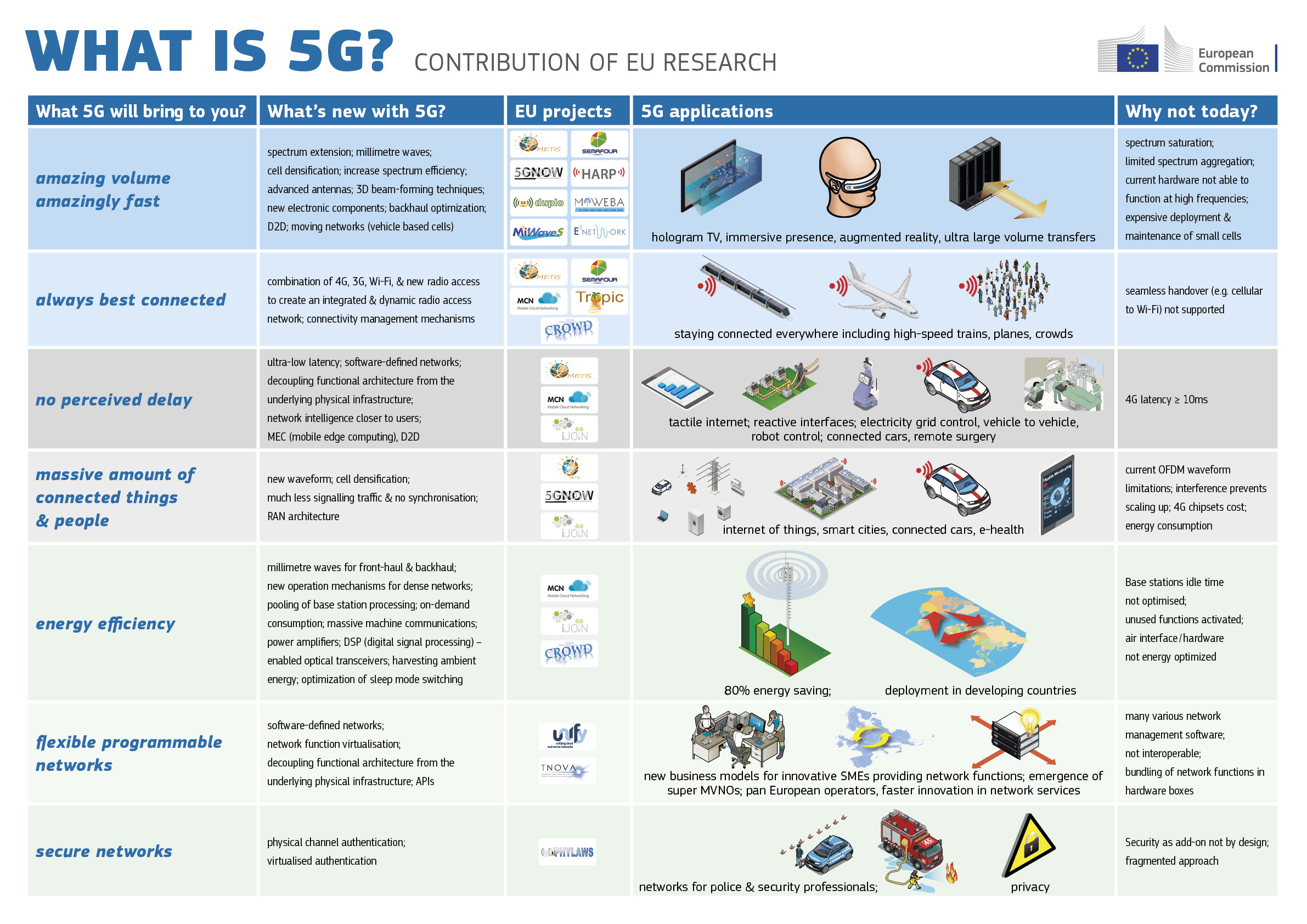
We are very excited about 5G, we have already reported on how the UK emergency services are moving over to a LTE network, and inevitably 5G is the next step for better, faster and more capable communications.  Not planned to be deployed until the next decade, we believe that 5G will allow us to communicate better with our Walkie talkies. The original article can be found here.

With faster and more reliable connections, we look at what the next generation of communications could mean for business

From smart cities to the internet of things (IoT), virtually every aspect of the modern world is becoming closely connected.

The extent to which we rely on our devices and the exchange of information means new systems are needed that not only handle far greater bandwidth, but that are capable of being deployed to cover areas that were previously unreachable.

The potential benefits for business are huge, with faster and more reliable connectivity not only enhancing how firms interact with customers and each other, but also lending itself to greater flexible working among staff.

The arrival of 5G

One development that many industry observers believe could be revolutionary is 5G. Following on from 4G, the fifth-generation mobile network is in its early stages of development and is expected to be rolled out between 2020â€"25.

Any tech that contributes towards the next phase of mobile connectivity is covered by the term 5G. And although there are still no set standards or specifications, the GSMA â€" a trade body that represents global mobile operators â€" has outlined eight key criteria, stipulating minimum requirements for speed, capacity and energy in order for something to be considered 5G.

According to Ofcom, once operational 5G could provide between 10â€"50 Gbps (gigabit per seconds) in download speeds (as compared to the 5â€"12 Gbps of 4G), and although most experts expect it to be at the lower end of the range, that would still mean you could download an HD movie in seconds.

But rather than simply being faster than the current 4G, it will also allow more devices to access the web â€" an essential requirement if the IoT is to take off â€" meaning it could be transformative for business.

Raj Sivalingam, executive director of telecoms for techUK, the trade association for the tech sector, says: “The potential of the IoT, particularly in the enterprise environment, has been hugely debated but its impact is almost certainly still undervalued.

“Mass deployment across sectors will boost efficiency and safety with pre-emptive fault correction; enable automatic r eporting of accidents and allow real-time asset tracking, reducing crime and increasing productivity, to name just a few benefits.”

One potential bottleneck for 5G is spectrum availability â€" or lack of it. Radio frequencies for both 3G and 4G are already overcrowded. The provision of a new bandwidth will require widespread cooperation between operators, manufacturers and governments.

Infrastructure is also an issue, says Sivalingam. “Making the leap to 5G mobile services and getting more fibre into the fixed telecommunications networks will require substantial amounts of investment.

“We need the government and industry stakeholders to work to shift the UK from good levels of connectivity to great levels so that we continue to attract investors and startups, and to foster innovation from within the UK.”

Cognitive radio

One possible solution is cognitive radio. An adaptive radio and network technology, it can sense and respond to its operating environment and automatically tune itself to the best available frequencies, this makes it more reliable in extreme locations where signals are weak, potentially providing dependable, robust connections that are not hampered by interference or geography.

Finland-based KNL Networks has developed a system using the technology that uses short wave radio to transmit internet access to sites in remote locations ranging from oil rigs to polar research stations. KNL Networks CEO Toni Linden says: “We can provide similar connectivity to those from satellites but with a terrestrial radio system. Our radios receive the whole spectrum all the time, so rather than scanning, real-time broadband receiving is going on. Thus we can see and measure everything that’s going on in the spectrum and we can maintain the network connectivity that way.”

< br>
The tech opens up the possibility of providing seamless connectivity anywhere, giving business reliable online access to markets in parts of the world that have otherwise been unreachable. It could also enable media and other companies to broadcast without the need for expensive satellites.

Quantum key distribution

It’s not just data transmission, speeds and connectivity that pose challenges in the future, but the safety of that data too. Cybercrime is ranked alongside terrorism as among the most serious threats to the UK [pdf], and with data now the lifeblood of modern business, securing that data is of paramount concern. One technology that could provide the answer is quantum communications.

Conventional encryption relies on sending a decryption key alongside your secret data. The receiver then uses that key to decode your secret information. But problems arise because hackers can also copy this key and steal your data.

Quantum key distribution (QKD) is different because it encodes this key on light particles called photons, and an underlying principle of quantum mechanics means that a hacker trying to read or copy such a key would automatically alter its state, effectively leaving a hacker fingerprint so the sender and receiver know their information security had been breached.

China recently launched a quantum satellite to further research into this technology, with the hope of developing an uncrackable communications network.

In the UK, the Quantum Communications Hub is part of a national network of four hubs led by the universities of Birmingham, Glasgow, Oxford and York. Director Tim Spiller says: “We are developin g quantum communications technologies along a number of different directions, notably short-range free space QKD, where the transmitter could be in future mobile phones, and chip-to-chip QKD through optical fibre, where the chips could be in future computers and other devices.”

With two thirds of British business falling victim to cybercrime in the past year the need for better encryption is clear.

Several companies currently offer commercial quantum key distribution systems include ID Quantique, MagiQ Technologies, QuintessenceLabs, SeQureNet and Toshiba, although its high cost and limited range means mainly banks and governments are its main users, with mainstream adoption still some way off.

Spiller added: “Certainly it would be desirable to improve the size, weight, power and cost points of current technologies and our work i n the hub and elsewhere is addressing all these factors.”

Paul Lee, head of technology, media, and telecommunications research at Deloitte, highlighted a number of improvements which he expected to see coming down the line, including improved mobile antennae and base stations, as well as improvements to fixed networks such as G.fast that would enable copper cable to operate at much higher speeds.

“As they get steadily faster, new services emerge to exploit these greater speeds, which then requires the deployment of even faster networks. This tail chasing has been going on for decades and won’t stop in 2017.”

It’s all around us but we can’t see it, what exactly is RF Communication

Radio frequency (often abbreviated as, RF), can be described as any frequency within the electromagnetic spectrum with radio wave propagation that lie in the range extending from about 3 kHz to 300 GHz; this includes the frequencies that are used for communications or the radar signals. That said, you should know that RF generally refers to electrical rather than the mechanical oscillations.

RF communication utilizes radio waves rather than wires to exchange signals, and this is where the term "wireless communication," comes from. RF modules generally use frequencies to distinguish the different radio signals, therefore, in order for the RF modules to communicate, they have to be operating on the same exact frequency. That said, you should know that radio frequency is normally measured in units known as hertz (abbreviated as Hz), which represent number of cycles/second when the r adio wave(s) is transmitted. 1 hertz (Hz) equals 1 cycle/second, and 1 megahertz (abbreviated as, MHz) equals 1 million cycles/second.

A radio frequency (RF) signal basically refers to the wireless electromagnetic signal that's utilized as a form of communication, when talking about wireless electronics. As mentioned earlier, radio waves are a type of electromagnetic radiation which have identified radio frequencies which usually range from about 3Hz to 300 GHz. Not every radio wave is the same; they can be small or big, or they can be far apart or close together. On the radio stations we normally listen to, every station uses waves which are on a slightly different frequency from the other stations. Whenever you happen to switch from one radio station to another, your radio picks up and then plays waves of that particular frequency.

Frequency normally refers to the oscillation rate of the radio waves. It can also refer to how close together or far apart the waves are. When the radio waves are too far apart, that is known as low frequency, and when the radio waves are close together, that is known as high frequency. That said, you should know that radio frequency propagation happens at speed of light, and doesn't need any medium (such as air) in order for it to travel. Radio frequency waves occur naturally from lightning, the sun flares, and even from stars which radiate radio frequency waves as the get older. However, people usually communicate with man made radio waves which oscillate at various select frequencies.

The man made radio frequency waves are produced by oscillating current for a certain number of times, and radiating it off the conductor (which is referred to as the antenna), into an empty space (this is the space that's occup ied by air and not the outer space), as electromagnetic radio waves. The RF signals are received and sent using conductors via the phenomenon that's called the skin effect, where radio frequency current latches itself and then flows through the conductors' surface; this effect is actually the basis and the core of radio technology.

The best thing about RF communication, is that it's omnipresent (that is to mean it's all around us). It plays a crucial role in many of the communications systems which we depend on a daily basis, such as fire and police radio systems, TV and radio broadcasts, and satellite communications. Cordless phones, cellphones, Wireless internet (Wi Fi), and Bluetooth also operate in the radio frequency spectrum. In addition to that, there are other appliances outside of the communications field that use RF. They include; microwave ovens, garage door openers, among others. Some wireless devices such as TV remote controls, cordless computer mice, computer k eyboards, and even 2 way radios also operate using RF frequency.

Two way radios are based on the RF frequency and they perform group communication using minimum radio frequency channel resources. This is to mean that if all the users are in the same location or area (most of the time), you will only need a single channel resource in order to talk to them. By using RF, two way radios have the capability of facilitating “one to many” group communication (which is also known as a group call), very efficiently. By efficient, I mean that 1 user can communicate/talk to 1, 5, 10, 100 or even 1000's of users at a go. The two way radio user doesn’t need to keep on repeating the same message if he/she needs to convey to many users.

Sunday, 2 April 2017

MIT's new method of radio transmission could one day make wireless VR a reality

VR is the Buzz word for this year, every technology company clambering to get their headset out on to the market. Much of the market needs to catch-up though, the power of home computing needs to improve and removing the inevitable extra cabling and wires that come with current headsets. Luckily this article is about the future technology of VR headsets, see what we can expect as this technology grows.


If you want to use one of today's major VR headsets, whether the Oculus Rift, the HTC Vive, or the PS VR, you have to accept the fact that there will be an illusion-shattering cable that tethers you to the small supercomputer that's powering your virtual world.

But researchers from MIT’s Computer Science and Artificial Intelligence Laboratory (CSAIL) may have a solution in MoVr, a wireless virtual reality system. Instead of using Wi-Fi or Bluetooth to transmit data, the research team’s MoVR system uses high-frequency millimeter wave radio to stream data from a computer to a headset wirelessly at dramatically faster speeds than traditional technology.

There have been a variety of approaches to solving this problem already. Smartphone-based headsets such as Google's Daydream View and Samsung's Gear VR allow for untethered VR by simply offloading the computational work directly to a phone inside the headset. Or the entire idea of VR backpacks, which al low for a more mobile VR experience by building a computer that's more easily carried. But there are still a lot of limitations to either of these solutions.

THE MOVR PROTOTYPE SIDESTEPS TETHERED VR ISSUES

Latency is the whole reason a wireless solution hasn't worked so far. VR is especially latency-sensitive, along with the huge bandwidth requirements that VR needs to display the level of high-resolution video required for virtual reality to work. But the MIT team claims that the millimeter wave signals can transmit fast enough to make a wireless VR headset feasible.

The issue with using millimeter wave technology is that the signal needs a direct line of sight, and fares poorly when it encounters any obstacles. MoVR gets around this by working as a programmable mirror that can direct the direction of the signal to the headset even while it’s moving to always make sure the signal is transmitting directly to the headset's receivers.

For now, the MoV R is simply a prototype, with the team hoping to further shrink down the system to allow for multiple wireless headsets in one room without encountering signal interference. But even as a proof-of-concept, it's an interesting perspective on how virtual reality could one day work.

Sunday, 19 March 2017

Growth of Global Hearing Amplifiers Market Driven by Increase in the Number of Prevalence of Hearing Impairment Patients in Old and Young Population

We found this article and couldn’t not post this to our blog, it shows how hearing damage is on the upsurge. With cases of hearing loss growing every year, hearing amplifiers and hearing aids sales have consistently increased. There doesn’t seems to be an answer to this rise but as technology improves, answers can come that way.

Hearing loss can occurs when inner ear or nerve is damaged, which may be caused due to diseases, aging, loud noise, and medications. Hearing amplifier is a small part of hearing aid which makes the sound louder. Hearing amplifiers increase the power of signals and then send them to the ear through speakers.

Hearing aid is useful in improving the hearing and speech of patients. An otolaryngologist investigates the cause of the hearin g loss. An audiologist is a hearing health professional who identifies and measures hearing loss and will perform a hearing test to assess the type and degree of hearing loss.

Increase in number of hearing impairment cases coupled with rising costs of hearing aids are expected to drive the growth of the global hearing amplifiers market during the forecast period. Majority of the consumers use hearing amplifiers or personal sound amplification products (PSAPs) as they are considered cheaper alternatives of hearing aids. Hearing amplifiers or PSAPs, are designed to amplify sounds in any recreational environment and are exempt from the Food and Drug Administration (FDA). Hearing amplifiers are sold directly to consumers as electronic devices without the requirement of a physician prescription.

According to National Institute on Deafness and other Communication Disorders (NIDCD), approximately 324,200 cochlear implants have been implanted worldwide. About 15 percent of A mericans (26 million people) between the ages of 20 and 69 have high frequency hearing loss due to exposure to noise at work or during leisure activities. Major driving factors for the growth of the global hearing amplifiers such as an increase in the number of prevalence of hearing impairment patients in old and young population, increasing investment in research and development in ENT field among others.

Based on styles or design types of hearing aid products the global market of hearing amplifiers can be segmented as follows:

-Behind-the-ear (BTE)

-Mini BTE

-In-the-ear (ITE)

-In-the-canal (ITC)

Based on function the global hearing amplifiers market can be segmented as follows:

-Analog hearing aids

-Digital hearing aids

Based on distribution channels the global hearing amplifiers market can be segmented as follows:

-Hospital Pharmacies

-Online Pharmacies

-Independent Pharmacies and Drug stores

Hearing amplifiers market is segmented into five major regions: North America, Europe, Latin America, Asia Pacific, and Middle East & Africa. In 2015, North America lead the global market of hearing amplifiers followed by the Europe in terms of revenue. According to statistics compiled by the National Institute on Deafness and Other Communication Disorders (NIDCD), 37.5 million adults aged 18 and older in America report some form of hearing loss.

According to the National Institute on Deafness and Other Communication Disorders (NIDCD), 28.8 million U.S. adults could benefit from using hearing aids and more than 90 percent of deaf children are born to parents suffering from some kind of hearing disorder. Globally, the hearing amplifiers market is expected to witness a healthy CAGR in terms of revenue during the forecast period.

Latin America, Middle East & Africa and Asia Pacific regions are the emerging markets in the global hearing amplifiers market. Increasing awareness among the various distribution channels as well as consumers in these regions is anticipated to propel global market growth of hearing aids and amplifiers during the forecast period.

The key players in the global market develop hearing amplifiers in analog and digital forms. Some of the top companies in the global hearing amplifiers market are Sound Hawk, Resound, Foshan Vohom Technology Co. Ltd., Sound world solution, Shenzhen LA Lighting Company Limited, Austar Hearing Science and Technology (Xiamen) Co., Ltd., Huizhou Jinghao Electronics Co. Ltd., Ziphearing among others.

Tuesday, 7 March 2017

NFL investigating Giants for using two-way radio during game against Cowboys

Apparently using a two way radio during an American football game is frowned upon over in the good old US of A, This article is about a game between the Giants and the Cowboys. During a Game the coaching staff and Quarterback are not allowed to communicate if there is 15 seconds or less on the clock, this rule might have been broken with the use of a walkie talkie.

The NFL is investigating the Giants’ potentially rule-breaking use of a two-way radio during the team’s recent 10-7 win over the Dallas Cowboys.

The use of a two-way radio by a coach during a game is strictly against league rules, according to ESPN.

In the fourth quarter of the Cowboys game, Giants head coach Ben McAdoo was spotted using a walkie-talkie to communicate play calls with Eli Manning after his headset malfunctioned.

In the fourth quarter of the game, Giants head coach Ben McAdoo was spotted using a walkie-talkie to communicate play calls with Eli Manning after his headset malfunctioned.

The Cowboys issued a formal complaint to the league over the radio use, but the NFL’s investigation was already underway by the time Dallas contacted them.

The NFL has a rule against coaches using two-way handheld radios because the league cannot control when both parties are communicating.

A coach using a walkie-talkie makes it harder for the NFL to monitor a league rule that states communication from the sideline to the quarterback must end when 15 seconds are left on the play clock.

With headsets, the NFL has the power to shut off communication at will with a “cutoff switch operator,” ESPN reported.

The Giants had no comment when reached Thursday night.

McAdoo used the walkie talkie in question, however, for about four or five plays on the Giants’ fourth-quarter drive that ended in an Eli Manning interception on a pass intended for Victor Cruz.

McAdoo’s normal equipment malfunctioned and as the Giants worked to fix it, the coach was handed the walkie talkie temporarily because its signal was reaching Manning’s helmet.

As the Giants worked to correct McAdoo’s equipment, Odell Beckham Jr. could be seen running to the sideline to bring plays back to the huddle and Manning was heading over to the sideline, as well.

There is no evidence in reviewing the game film that demonstrates McAdoo was on the walkie talkie for longer than the allowed 15 seconds of communication with his quarterback.

There is also, of course, no evi dence that the Giants gained any advantage even if he was. The drive ended in a turnover and the Giants’ offense stunk most of the night.

Saturday, 18 February 2017

How Headsets Transformed The Entire World

It is surprising how in a crowded, noisy environment you can still create your small world. This is one of the most amazing changes that have been made by headphones. Small devices with a big impact on the world are the only way to describe headphones. In the past, the only way to listen to music was through devices that allowed everyone to listen to music at the same time. With the introduction of headphones, you don’t have to bother everyone with your music; you can create your space and enjoy listening to what you like directly to your ears.

How headphones have changed over time


Early headphones were mainly used for communication purposes. The birth of headphones in early 19th century was purely for communication and professional uses. It is strange how the creator of headphones Nathaniel Baldwin didn’t have the musical concept in mind. The uses of headphones at this time were purely for professional uses by people in the army and also church coordination.


Discovery of stereo phones for music was a big break in the mid-19th century, the whole perspective of headphones changed from professional use and they were given a musical touch. The musical evolution changed the concept of headphones, and this gave birth to the stereo phone technology to cater for musical fanatics. This was when headphones specifically for music were created, but they were expensive.

Light weight portable headphones were discovered in the 1980s there was a big break after everything went mobile. The headphones now become lighter, and you could see youngsters carrying them around. The growth of the pop culture at this time might have had a huge impact on how people wanted to listen to their music and this made headphones grow more. The sound quality becomes better at this time.

Modern fashion statement headphones are now common to bring out personality and social standards. The headphones that we have now are bringing the fashion statement in mind. The unique design and the big brand names like Beat by Dre are bringing a new perspective on the way we view headphones. The technological advancement is sound quality is now improving due to latest technological innovations.

Benefits of headphones in the modern world


Good sound quality and faithfulness is one of the main benefits of headphones. We all agree listening to music through headphones feels good compared to listening through loudspeakers. The reason for this is quite listening simply. Music from headphones has no interference from external forces and especially if you are listening to music through quality headphones.

The concentration at work is now better with headphones. With the use of headphones, it is now possible to get peace of mind and keep up concentration whilst working. It is surprising how music takes us to a new world where we can be able to reflect and focus on the work we are doing. This is the reason why you will find people working in jobs that need a high level of concentration using headphones all the time.

Peace of mind and calming stress is a major reason why many people use headphones. Music is therapeutic, and it works wonders in relieving stress and restoring peace of mind. Listening to music through external speakers is good for entertainment but not necessarily for healing. There is something special about listening to music through headphones because it brings calmness and brings back peace of mind.

Privacy is one thing that many people seek in the crowded and noisy world. If you want to maintain privacy, then you can easily escape in your headphones and get the privacy that you need. People around you will understand that you need privacy and allow you to have your solitude.

Who uses headphones?


The uses of headphones are now limitless, and they go beyond just for the sake of entertainment and communication purposes.

Music lovers get lost in their headphones for hours listening to music without interrupting the rest of the world with the type of music that they love. Using headphones, music lovers can get the sound effect that they want from the headphones through sound effect settings.

Transcribers who translate audio content into text need headphones to be able to listen to what they are typing. This is one of the most common professional use of headphones. Other people like pilots, recording artists and also the military use headphones in their job.

You can find a whole ton of two way radio headsets at this amazing store headsetonline.co.uk

Tuesday, 14 February 2017

Radio Earpieces: Eight Top Tips For Selecting The Right One

When choosing a radio earpiece, there are several factors that should be considered. A radio earpiece should not only aid in communication it should also protect the user’s ear against cumulative ear damage that may eventually result in ear loss. Below are the factors that you should consider when buying a radio earpiece;

1) Clarity of communication

The most important reason as to why you have a radio is for clear communication and this is what your radio earpiece should enhance. Although there are several radio earpieces out there, many of them use bone conduction when transmitting the user’s speech meaning that they heavily rely on vibrations of one’s skull as they talk. This does not help much in ensuring that the communications are clear especially when one is on the move.

You should therefore go for a system whose in-ear microphone does not use bone conduction and this will enhance the sound clarity. Such a system can even transmit speeches when one is whispering and this comes in handy especially when in an environment where secrecy is very crucial.

2) Comfort

It is very important to select a system that you feel comfortable with most importantly when you are to wear it on your head. Note that, you will probably be wearing the gear for long hours and that is why it should be of lightweight and should not in any way interfere with your eye wear or helmet.


Avoid heavy, sweaty and coiled tube earpieces that are very uncomfortable and will cause ear fatigue. Instead, go for a radio earpiece whose microphone is built into the earbud itself. Such earpieces come in various shapes and sizes and can even be customized to fit the specific needs of a user. Note that, military-grade materials are specifically designed to be of lightweight.

3) Durability

Durability is a very important factor that should be considered when choosing a radio earpiece . You obviously don’t want to be wasting your time and money going back to look for another earpiece just because the one you chose did not last. This is why it is very important to select a system that is durable and has been tested for rugged use of a soldier or a SWAT officer. Go for one whose manufacturer is experienced in manufacturing earpieces that can withstand water, dirt, shock and even extreme temperatures.

4) Ease of use

Your radio earpiece should be easy to use because you can’t afford to mess up with the push-to-talk or the on & off buttons especially when on the move. Your gear should immediately fit into your actions with minimum effort. Look at the operational and the ergonomic features of the various radio earpieces and make sure that all its features are both of the right sizes and in the right places.

5) Hearing protection

Claims related to hearing loss and its related disabilities is on the rise among police & military veterans and this has led to the need for hearing protection for officers. Note that, hearing loss occurs cumulatively over time and it is irreversible. This is in addition to the fact that it has been associated with cognitive decline and that is why even the minor hearing loss can have a huge impact in the course of time. Select a radio earpiece that not only ensures effective communication, but also the hearing safety of the user.

6) Situational awareness

An earpiece is basically meant to keep you focused and keep your hands free. You should be aware of what is happening in their surrounding and that is why a radio earpiece should allow one to hear sounds that are outside, to stay alert with their surroundings.

In order to have full communications (just like one would have without anything in their ears), it is wise to choose a radio earpiece that has an external microphone. There are systems that even enable you to adjust volume of the external microphone and this ensures that you are aware of the happenings in your surroundings.

7) Modularity & Compatibility

There are several systems that are available out there and you should look for one that fits your requirements. As mentioned above, some of them can be customized to fit an individual user’s specific needs so you can never run out of options.

A radio earpiece that has a modular connector is good as you can change it to match even a different radio without having to replace the entire system. Some systems can even go with both earbuds and over-the-ear earpieces so depending on your needs, select the appropriate system.

8) Affordability

Many years ago radio earpieces cost £100 and upwards, these days you can get a D-ring earpiece for less than £15 and an acoustic tube for about £25. Bone conductor earpieces that were previously and expensive piece of technology, can be yours for about £40.

Sunday, 12 February 2017

I Bought a Two-Way Radio With a Range of 25 Miles...Why Won’t It Work?

Sorry, but you’ve been had. Although many manufacturers boast that their radios can reach amazing distances, this is, in almost every instance we’ve encountered, a fallacy.

How is this legal, you may ask?

Essentially, your radio quite probably could work over a range of 25 miles, but that is a theoretical estimate, working on the assumption that the myriad variables that affect two-way radio signal (such as atmospheric conditions, topography, objects in the way and etc) are simply not in effect.

All of them. At the exact same time.

So, assuming that you used your two-way radio in a vacuum, where weather didn’t exist and no obstacles, man-made or otherwise, were present, you would be able to communicate with someone else who was further away in that impossible vacuum, maybe even 25 miles away, but otherwise? Forget it.

The fact is that the average two-way radio has a range of between one and two miles and not much more (maybe three, but we’re not making any promises). CB radio fares significantly better, largely because it makes use of large aerials. Now, Signal-boosting equipment can be used to improve your two-way’s performance (for example, repeaters), but such equipment is expensive and hard to obtain for legal reasons.

There are, however, a few factors that can have an affect on your radio’s range. The frequency being used, the power output, the size of the antenna, the complexity of the signal being sent, signal interference, background noise and (as we wrote earlier) objects in the way are all factors that can improve (or hamper) your efforts to get your signal to reach as far as possible.

So, talking on your radio whilst in the car will have a deleterious affect on your signal, as will deliberately walking through wooded areas or places with a lot of rocks/mountains if you can take an easier path.

However, a larger antenna (if you’re tech orientated, the antenna can be replaced with a better one â€" although this should only be attempted if you are


  1. a) Sure about licensing laws


And


  1. b) Tech savvy enough to void the warranty and not regret it later, can really add a few hundred meters to a radio’s range, as can a switch in frequencies.


Also, your choice of VHF or UHF radio will have an affect as well, a UHF signal, for example, generally penetrates buildings and objects better than a VHF signal, whereas VHF is better for outdoor use where there is a lot of open space to transmit across.

Having said/written that, even in optimum conditions, you are extremely unlikely to transmit over a distance of 25 miles. Sorry.

As an aside, mobile phones don’t suffer from this lack of coverage, largely because cell towers are in place that bounce the signal from one to the other and thus carry it across a far larger area, your mobile is still your best bet to break that 25 mile mark, we’re afraid.

If you really must use radio communications over long distances, we recommend going to the Website 2wayradionline.co.uk

Hope that helps.

Sunday, 8 January 2017

WiFi Enabled LTE Small Cell Gateway Market to Register a Strong Growth By 2021 - PMR

On paper, connecting walkie talkie radios to a Wifi networkis is the most obvious method of controlling and communicating within a business. But the reality is that there aren’t many radios on the market that have the capability to do this and many wifi networks aren’t robust enough to manage lots of radios, this article predicts that this technology will be a growth market, we will wait and see.

WiFi enabled LTE small cell gateway is a type of a base station. Base station uses cellular wireless network for communicating with mobile phones or terminals. Base station connects mobile phones to a wireless carrier network and offers local coverage for a wireless network. The area of coverage varies from several miles to few city blocks. Each base station is typically owned by one carrier or wireless company and gives coverage only for that company's network. It may also offer roaming coverage for other networks in case carriers have agreement for roaming and technology is compatible. Base station comprises of an electronic cabinet which connected by means of cables to a group of antennas. The antennas may be mounted on an existing structure or on dedicated tower structure including top of a building, church steeple or smoke-stack and water tower.

In radio communications, base station refers to wireless communications station implemented at a fixed location and used to communicate as wireless telephone system including cellular GSM or CDMA cell site, part push-to-talk two-way radio system, terrestrial trunked radio and two-way radio. A single location often operates several base stations owned by a different carrier. Smaller types of base stations or small cells include picocells, femtocells and microcells. WiFi enabled LTE small cell gateway is promising network element. A wide variety of base station deployments are in a small cell configuration. It has WiFi interface at end-use device and LTE interface at the carrier network.


Small cell is low-powered radio access nodes (operator-controlled) that operate in carrier-grade Wi-Fi (unlicensed) and licensed spectrum. Small cells normally have a range from 10 to numerous hundred meters. Small cell base stations are expected to play vital role in expanding the capacity of wireless networks due to increasing mobile data traffic. Mobile operators are increasingly looking forward to this technology in order to meet the rising demands for data, video and application access generated due to smart phones and other devices. Small cells aid mobile service that detect presence, interact wand connect with existing networks. Small cells offer increased quality of service and flexibility at an affordable cost. Small cell infrastructure implantation is an environmentally friendly approach as it reduces the number of cell towers and offers a cleaner signal using less power.

Rising numbers of wireless carriers or companies are taking dedicated interest in this industry owing to the proliferation of embedded WiFi features in fixed and mobile devices. Growing demand for more advanced handheld devices such as smart-phones and tablets is expected to create demand for technologies with high internet speed. This in turn, is expected to drive the growth of WiFi enabled LTE small cell gateways.

Tuesday, 20 December 2016

Ham radio: A last resort when phone lines fail

We at this blog believe in radio communications and will never let it die, understanding the importance that it still plays, and during the worst catastrophes, will be the best form of communication. This story about 9-11 adds proof to this statement.

If disaster strikes, there is a form of communication that can still get through: a ham radio.

When 9/11 hit New York City in 2001, for instance, ham radio operators provided a connection to the outside world.

One of those people was amateur radio enthusiast Bob Kyvig, formerly of White Bear Lake, who now lives in Centerville.

“The only communication out there on 9/11 was amateur radio,” Kyvig recalled. “The telephone lines were jammed and no one was going in or out.”

On the days following that horrific attack, Kyvig assumed the role of messenger, relaying messages from Manhattan to loved ones in the area by calling or knocking on their door. His house calls would go like this: “I am Bob; I am a ham operator. I just communicated with your loved one; they are fine and doing well and they will talk to you soon.”

When White Bear Lake sailor Gerry Spiess landed in Samoa on his historic solo voyage across the Pacific Ocean in 1981, he contacted Kyvig, who connected Spiess with his wife Sally.

When Hugo’s tornado struck in 2008, he and wife Jill remained on the radio as long as they could but had to abandon the “ham shack” as the storm approached. The tornado did $30,000 damage to their home, including Kyvig’s outside antennas.

A ham since 1968, long before Facetime, email or Skype, Kyvig was 20 when he took up the hobby while serving in the Navy. He was stationed in Hawaii and had childhood buddies serving in Germany and aboard the USS Milwaukee. The three met on the radio at least once a week without fail for more than 40 years, until the death of one of the men in 2015.

That connection to people is what Kyvig most enjoys. He chats on the radio to people he’s never met around the world.

“It’s a worldwide network of people enjoying fellowship with other hams,” Kyvig said.

The radio operator answers calls for help in areas of “health and welfare,” and was on Centerville’s first CERT (citizen emergency response team), which is now inactive. He serves as a severe weather spotter too, and gains “insights” as to what is happening around the world by chatting to foreigners.

“We talk about everything from fishing, to weather and local problems,” he said. “It’s very interesting because you find out so much about people across the world. And it’s not just the personal part but handling messages for help in disasters.”

He’s listened to astronauts aboard the space station and scientists at the South Pole. He has talked to people in Russia, New Zealand and most of Europe. For a long time, he kept a conversation going with a man in Norway who lived close to some of his relatives. Wife Jill also has her ham license and enjoys talking to other women, known as YLs or young ladies, across the world. “Lord knows what they’re talking about,” Bob said. “I leave the room.”

Ham buffs do have opportunity to meet at events called “eyeball picnics.” The Kyvigs traveled to a picnic in Branson, Missouri earlier this summer to socialize with other hams and match voices with faces.

Without getting too technical, Kyvig explained that radio signals are bounced up through the ionosphere. The signal goes up and down several times before it hits the final destination and you don’t control where it hits. People who want to contact Kyvig can tune into his call number: WA0ROH, assigned by the Federal Communications Commission (FCC), which regulates interstate and international communications. The agency requires operators to keep a log of who they talk to on an electronic spreadsheet.

“We could be talking to people the FCC thinks is a bad guy,” he said. “Because we can transmit all over the world without a phone line, some use it to their own means.”

Other countries have comparable agencies.

Each country has its own beginning call letters. The United States uses W, K and N.

“The concept is simple,” he added. “We use what Mother Nature has provided: airwaves. We plug a number in for a country and anyone can answer.”

A true party line, Kyvig said 30,000 people could be listening in on a conversation.

Jill proudly pointed out that Bob earned a master’s degree from The 3905 Century Club. It’s not the typical academic degree, but a difficult achievement nonetheless. “The degree was a challenge,” he said, which explains why only 68 radio operators have received the degree since 1967.

Bob inspired her to get her license, Jill said, and together they do public service events using ham radio.

Invented in the early ’20s, ham equipment is evolving, but affordable. Newbies can do it for about $300, he said. There are antennas on his roof, but mostly they are horizontal wires stretched between a tree and the house. Generator backup is used if there’s a power outage. He also keeps a mobile 12 volt transmitter that he can use in his truck to chat while he’s driving.

At one time, working knowledge of Morse code was a requirement to get an FCC ham license, but that was dropped, so more people are getting into it, he said.


When he’s not on the radio, Kyvig enjoys making furniture and fixing TVs. He retired from a career in computer operations about five years ago.

Source - http://www.presspubs.com/citizen/news/article_c147ab30-7c25-11e6-9028-679823bb75af.html

Saturday, 17 December 2016

5 Examples of Earpiece to Hear Far Away

1. Using a Mobile Phone And Bluetooth headsets or Earpiece

To do this, you simply need to go into your mobile phone's settings and then change answering mode to Auto; this enables your phone to answer automatically when you ring it. Most mobile phones only work in the Auto answer mode, after you have plugged in the headset.

After turning on the Bluetooth headset, make sure it's properly paired with your cell phone, and confirm the battery has adequate charge. Hide your Bluetooth headset somewhere you know it'll pick up the sounds clearly, however, make sure that it's well hidden.

Leave the room, however, do not go very far. The Bluetooth connection will work through the walls, but if you happen to go far away, it'll not work very well (the range can be up to about 30 feet or 3 rooms away). Now test your cell phone by calling it to see how far you can actually go and still get to hear the bugged room through the Bluetooth headset.

You can wait for the conversations to get to the interesting part, and then turn on voice recorder on the cell phone; it should be able to record via the microphone of your Bluetooth headset.

2. Using a Two Way Radio and Earpiece

Two way radios allow users to communicate when they're far away such that they can not hear each other. These devices use radio frequencies instead of cell phone towers which means they will work in areas where there's no cell phone coverage or reception.

The two way radios offer instantaneous communication; users simply need to press the Push-To-Talk (also known as PTT) key, and they can instantly talk and convey their particular message to the other party. This is due to the quick call setup time that's entrenched in this technology. The ability to offer quick communications is one of the reasons why most organizations prefer the two way radios for their tactical and operational communications.

Another great feature of the two way radios, is the ability to facilitate one to many (also known as, group calls) communications effectively. This basically means that a single user can conveniently communicate with 2, 10, 20, and more, of other two way radio users at the same time. In short, there is no need for you to repeat time and time again when you want to communicate with many people and using a two way radio earpiece, this communication is much more secure

3. Ear Spy Application

Ear Spy App is a great eavesdropping tool. Depending on just how good your cell phone is, this app can become a very high powered listening tool. Ear Spy application can route the audio from your cell phone's mic right to to your headset letting you eavesdrop on the people around you whilst remaining inconspicuous. When using a Bluetooth, you can use this app to spy from a room nearby; you simply need to leave your cell phone near the target, and then use your Bluetooth headset to eavesdrop. If you want to fine tune the incoming signals, you can use the graphics audio equalizer. Whether you wish to eavesdrop on particular conversations or you just want to play some spy games, Ear Spy application will be of great help in your endeavor. You should know that this app requires you to use headphones, otherwise you will get poor audio feedback.

4. Spy Glasses

This spy device comprises of an in built Bluetooth transmitter which looks like ordinary glasses, a microphone and a wireless earpiece. Connections between the glasses, the earpiece and your cell phone are wireless, thus totally unnoticeable to other people; the device's ultra compact design basically ensures nobody will know it is a spy tool. Spy glasses are compatible with almost any mobile phone which has the Bluetooth option. Actually, the Spy glasses are universally compatible with all the standard Bluetooth enabled equipment including computers. Some of the features of this device include; excellent transmission and reception of audio signals, built in microphone, and a large capacity Lithium battery.

5. Micro Air Vehicles (MAVs)

Modern technological advances are ever increasing human's potential for developing tiny things. As for the United States Air Force, this translates to revolutionary designs in the air vehicles to provide the war fighters with new tools which can enhance both the situational awareness, and also the capacity of engaging quickly, accurately, and with minimal collateral damage. This is where Micro Air Vehicles (also known as MAVs) come in. The term MAV or micro air vehicle, refers to the a new type of advanced remotely controlled aircraft (abbreviated as, UAV) that's significantly much smaller than other similar aircraft. Typically, MAVs can easily blend in with the surrounding environment, stay in air for a long period of time, and can go places which can't be reached safely by humans, or most of the other types surveillance equipment.


The target dimensions for MAVs is approximately 6 inches (15 centimeters), and the development of actual insect sized aircrafts is expected in near future. As a matter of fact, various efforts in the research on micro air vehicles have involved attempting to mimic flying insects so as to achieve the flight capabilities which aren't attainable through the use of other means of aerial propulsion. In the year 2007, a bug like Micro air vehicle model with a wingspan of 3 cm was revealed at a robotic's conference; in the year 2008, the United States Air Force released a video showing Micro air vehicles which were the size of a bumblebee; and in the year 2012, some engineers from Johns Hopkins University started studying flight of butterflies to discover how airborne robots can mimic their maneuvers.

The potential military use is 1 of the key driving factors, although the micro air vehicle can also be used commercially, as well as in scientific and mapping applications. The main military use envisioned for the micro air vehicle is gathering of intelligence via the use of microphones, cameras, or other types of sensor.

Conclusion

Some of the above points are illegal, and you should not do any of them. Also, do not use any of the above methods to record any intimate relations; the legal consequences of doing so are very severe. Finally, keep in mind that it's illegal in the US to make recordings of people without their consent/permission; and depending on what you'll do with the recordings, you might find yourself in big trouble.

Monday, 12 December 2016

How Many Walkie-Talkies Can Operate on the Same Channel?

Theoretically, you can use an unlimited amount of walkie-talkies on the same channel (although in practice you might experience a few problems if you took that suggestion literally). Basically, there isn’t really a set limit. You could use as many as you like provided they are set up correctly. Anybody set to the right channel and in range at the time of transmission would then be able to pick up the signal and respond to it.


Most radios have access to 8 channels. These channels each have 38 separate ‘identification tones’. The user sets his/her channel up with the desired tone and then only other users who know the channel/tone will be able to hear the transmissions. As a result, there are, in any given area, about 304 different combinations, so signal interference is unlikely to affect you.

Please do not interpret this answer as saying that your radio has access to 304 possible channels. It does not. It will likely only have access to 8. Some less reputable manufacturers tend to falsely imply access to 304 channels; this is simply not the case. You will have access to 304 possible tone/channel combinations, that’s all.

To better explain the CTCSS codes and how they work; we’ll include a little information from Amherst.co.uk’s FAQ page.

“CTCSS stands for "Continuous Tone Coded Squelch System". These codes are also often called "Privacy codes" If a CTCSS tone is selected; a CTCSS sub-audible tone is transmitted along with the regular voice audio by the transmitting radio. The receiving radio, set to the same CTCSS tone, will only receive audio if it contains that sub-tone. Interference from other users on the same frequency is therefore rejected (unless they are also on the same sub-tone). This is a way of allowing groups of users of walkie-talkies on the same channel to avoid hearing messages from other nearby users”.

So, in conclusion, you can probably use as many walkie-talkies as you like on the same channel. As long as the units in question are of the same type (either VHF or UHF) and have the same CTCSS setup, then you simply shouldn’t have a problem. You also shouldn’t suffer from signal interference due to other users (although you may still experience signal loss/interference/degradation from other sources). We have talked about combating signal loss elsewhere, so please see the other questions if you have any problems in this area.

Saturday, 10 December 2016

Columbia High Trail Family Dome Tent

For those of us who love to travel, all of the planning as well as the trip is pure joy! The worst part of any travel venture is packing, and then hauling around a bunch of luggage. After just a few trips of any length, the savvy traveler gets smart. You learn to pack smart and travel light! Would you believe that a large travel shoulder bag can carry everything you'll need for a month long trip abroad? It's true, though you may find it hard to believe. Let's examine the many virtues of the travel shoulder bag and then get into how to pack efficiently and economically, leaving the unnecessaries behind, but in possession of ample clothing.

Everyone who in ear monitors for singers read this article needs the solution. According to my observation, there is no hard and fast rule that works for everyone. What works for some writers may not work for others. In my case I have discovered that if I write all of my thoughts and feelings first and then go through my whole article with calm mind and at last revise the grammar and spellings. This works better for me and I feel quite comfort while writing my article in this way.


You would want to keep your gadgets safe from pilot language translator, moisture, heat or dust. But there are cameras that are inherently resistant to these external elements. Search for those cameras that can last longer than expected.


The use and maintenance of the cab enclosures is a very easy process on the whole. A very simple instructions manual comes with them to get them fixed to the car. As far as their cleaning is concerned the regular cleaning with your detergent and soap is going to do the trick. For daily cleaning just use any car cleaning rag and for the extra dirt use a soft cleaning brush. The best thing of all is that they can be easily replaced after they have completed their useful life.

verging on extreme conditions crossword clue have several advantages, but the systems will need to be a bit more complex. The ears can be either wired or wireless. Most people use wired in ears for drums and keys and any players that have a station on stage. Players that move around need wireless systems. Most players will need and individual monitor mix for their ears as well. Background singers may be able to share a mix.

If your dad is into gadgets, then there are a lot of options ear plugs for sleeping unique Fathers Day gifts. A USB beverage chiller or warmer is a great gift for dads stuck behind a desk all day. He can keep his coffee hot or his soda cold with these nifty gadgets.

The camping tents should be practically easy to set up. The sophistication of camping tents cannot always correctly measure their time to set up. The general conception about the cost of camping tents is that you get what you pay for. High quality material, better technology, large size etc. make you pay more.

Friday, 9 December 2016

World's slimmest, buoyant DSC handheld radio unveiled

Icom earpieces

The IC-M93D EURO VHF/DSC handheld radio is the successor to the popular IC-M91D. Stylish and slim, this new Icom handheld contains an abundance of features including a dedicated built-in DSC receiver (meets ITU-R M.493-13 Class D DSC), internal GPS and active noise cancelling technology. In addition, an intuitive interface coupled with 2.3 inch full dot matrix high-contrast display and soft keypad makes this a comfortable and easy handportable to operate.

The IC-M93D EURO has an integrated DSC/GPS giving users the facility to send and receive DSC calls. A dedicated DSC receiver continuously monitors CH70 and is independent of the main receiver and other operation. Other important safety at sea offerings include a built-in compass, navigation and Man Over Board features.

Advanced noise cancelling technology on the radio reduces background noise by up to 90 percent on both outgoing and incoming calls making sure your communications are heard. The IC-M93D EURO come as standard with the BC-220 rapid charger which charges the standard Li-ion battery pack in just 2.5 hours. The handheld's extended 1500mAh Li-Ion battery life provides a full day of use.


The IC-M93D EURO features Icom's exclusive Float'n Flash and AquaQuake technology. Should the radio be dropped overboard, a flashing light will activate, making it easier to locate. The Float'n Flash feature works regardless of whether the power is turned on. The AquaQuake draining function uses low-frequency sound waves to clear water away from the radio's speaker grill for clear audio.

Additional radio features include the IPX7 waterproof rating, 50 waypoint memories with alphanumeric names for navigation and a loud speaker.

Ian Lockyer, Marketing Manager of Icom UK, said: 'The IC-M93D EURO combines advanced safety features with an intuitive user interface for faster and easier access to all the radio functions.'

The IC-M93D is now available to buy from authorised Icom Marine Dealers with a suggested retail price of £349.95 including VAT.

Sunday, 27 November 2016

Those New Tracks You’re Listening to Are About to Sound Much Better

SO you’re walking down the street and suddenly the music kicks in, you drop to the ground and pull your earphones out of your ears! “what just happened” you think, then you realise the un-pause on the mp3 has just kicked in and you forgot to turn it down. Well people this will be a problem of the past with these earphones, Now all I need them to do is make coffee. VERY IMPORTAN You can find the original article here

What’s been your favorite set this weekend? Or the best new track you’ve shared with all of your friends? Well take that track and imagine listening to it in exactly the way your ears want you to.

Meet the Even earphones, who tune themselves to each person’s particular hearing. At just under $100, they customize the sounds they play to suit your own audio needs. They use their own EarPrint technology that measures how you hear different frequencies, then sets the earphones to play back sound specifically for each ear. As a result, the headphones give you a profile tuned to your own ear (each ear with its own profile).

One of the biggest things that originally drew me to the earphones was the fact that they are not a pre-order campaign â€" they have physical earbuds available now. The company, who launched in in June, has sold out batches twice thus far and are continuing to take orders on their website. Luckily, I was able to get my hands on a pair to try out as well.


I’m pretty picky about the gadgets I use for audio, as I’m constantly listening to music â€" digging for new sets on Soundcloud, reviewing new tracks, jamming out in my own world. Being able to plug in and listen to my own music is what allows me to focus and, as a result, I’m very specific about the type of earphones or headphones I use. That being said, I was overly ecstatic when I was handed a pair of Even earphones to try out.

First, their appearance: the cords are a high-quality string that have a smooth look and feel. The buds look sleek, with a simple black-and-white color scheme â€" one black, one white, with the EarPrint device hanging at the middle of the cord, meant to dangle at your chest. They don’t tangle easily, which makes them easier to carry without having to worry about dealing with knots. They’re the type of earphones I wouldn’t mind wearing out in public.

Next: the sound test. This is where we meet “Sarah,” the soothing female voice that guides you through a number of sounds to test where your hearing level is at. This test was very straightforward â€" Sarah literally starts by saying “Hi, this is really easy” â€" and felt very conversational as she talked you through each noise. Five pieces of music are played for each ear, and you’re required to hit the button once you hear the sound. Though the process takes a little bit longer than I’d like, it’s seamless.

Overall quality of the listening experience was great. I switched between my Bose over-ear headphones and the Even earphones to test the difference in sound quality and worked to try a few subgenres of electronic music to see how each would sound between both pairs. I started off by listening to Louis The Child’s set from Lollapalooza this year and instantly found that the vocals were much more emphasized than in my Bose headphones. Next, I moved on to Mikey Lion’s live set from Desert Hearts 2016 and loved the emphasis on the bass I was hearing â€" the Even earphones made it much more of an all-around experience. I then switched over to Troyboi’s tracks Do You? and O.G. to continue to test this bass theory and, again, Even delivered.

As my hearing is likely damaged based on the amount of festivals and shows I’ve attended over my lifetime, it was much appreciated that the earphones were able to pick up on the frequencies I have more trouble hearing to create the full experience tracks deserve. Interestingly enough, every time I switched back to my Bose headphones to compare, I had to turn the volume down because it came at full blast and was overwhelming â€" and, when I did, the clarity between vocals and bass was lost. All in all, these babies pack a punch with their sound quality when it comes to electronic music.

It’s refreshing that these earphones don’t require using an app, since that seems so commonplace nowadays. All of the information that goes into your profile is saved in the little box hanging onto the string, so you can plug them into any device â€" phone, laptop, iPod, whatever you want â€" and still have your own profile saved. I found this extremely helpful, as it meant that I don’t have to re-adjust my volume based on what device I’m using. Beyond that, it’s a refreshing change from listening to sets with friends and having to change the volume based on everyone’s sensitivities. It makes listening much simpler and, quite frankly, electronic music better. How could you say no to a custom-made, surround-sound system in your own ears?

To get you started, here a few sets, old and new, you may enjoy listening to in the earphones (ok, to be fair, these are sets that I would want to hear in them):


Saturday, 15 October 2016

Could hearing loss be a hidden cost of gaming?

Is this is a real problem? Do you use a set of headphones whilst gaming? This article has information on how damaging wearing gaming headphones is and what the future impact might be. Read this, examine how you use your headphones and get on with life…


According to the Q1 2016 GameTrack report, 18.8 million people between the ages of 6 and 64 game and those between 11 and 64 spend an average 8.8 hours per week doing so.

 Amongst Gamers the largest group is 15 to 24 year old males who are most at risk of permanently damaging their hearing. This group spends the most amount of time gaming and are also the most attracted to the “loud” games. Furthermore a majority of them live in a shared accommodation and use headphones so as not to disturb others. This group also the most likely to take part in other activities which can be harmful to their hearing such as listening to music through headphones, going to gigs and festivals, and nightclubs.

 Unfortunately the price of their enjoyment could well be significant and permanent hearing damage. Whilst there is clearly a risk to the Gamer, it could transfer as a liability to the games companies in the form of legal action relating to their duty of care.

 The first significant step is to make Gamers aware of how much sound exposure they are experiencing and what they can do to prevent hearing damage, because hearing damage is permanent

 Hearing damage is caused by the combination of how long you listen (time), how loud you listen (volume), and what you listen to (energy content). The combination of these three factors create a “sound dose”, if the dose is too high it starts to damage your hearing.

 The UN’s World Health Organisation and hearing conservation organisations are increasing awareness of the risks and advise users to restrict their daily sound dose to less than 85dB average over 8 hours.

 Gamers who use headphones currently have no realistic way to indicate what level they are listening at and how much of their daily sound dose they have used. The answer will be to provide them with an intelligent sound dose measurement app or software, giving them their individual sound dose exposure information and guidance, with optional protection, so that for the first time they can make informed decisions about their hearing health.

Friday, 14 October 2016

Hytera Awarded Multi Million Dollar Contracts in Dominican Republic

Hytera are the fastest growing radio country this year, they have opened offices all over the world and are taking market share from Motorola. When you look at their Hytera radio earpieces, Chargers, repeaters, hand portables and base units they are of an excellent standard and quality. That is probably why the Dominican Republic was persuaded to use them for two big projects.


Hytera, a world leading solution provider of Professional Mobile Radio communications, was awarded two projects by the Ministry of the Presidency of Dominican Republic. In order to establish a nationwide emergency response network for National Emergency Care System and Security 9-1-1 (Sistema Nacional de Atención a Emergencias y Seguridad), Dominican Republic government selected TETRA (Terrestrial Trunked Radio) technology for mission critical communications, and launched two public tenders at the end of 2015; one is to cover two cities, Haina and San Cristobal, adjacent to the capital city Santo Domingo, with 5 sites and 528 terminals, while the other is to cover Santiago, the second largest city of the country, with 30 sites and 2,155 terminals.

The existing TETRA network in the Santo Domingo area was delivered also by Hytera as a result of a contract awarded by Dominican Republic's Ministry of the Presidency in 2013. The project includes several components: the 911 system, a camera surveillance system and the communications infrastructure with its respective terminals which was awarded to Hytera. “The system in Santo Domingo offers reliable communication services to the public safety forces, and it is a very good testimony of Hytera’s solutions and supports,” said Fernando Camelo, regional director of Hytera international business.

“Dominican Republic government officials have spent a lot effort to choose the right technologies for its public safety forces. Obviously, TETRA has been widely adopted and proved. We are proud to be part of the initiative of building a united nationwide mission critical communication system for the country,” commented Ming Kam Wong, deputy general manager of Hytera international business.

The TETRA digital standard as a global open protocol provides secure, encrypted communications for mission critical operations as well as promoting a more efficient use of spectrum. More than 750 interoperability (IOP) certificates have been awarded to more than two dozen manufacturers by the TETRA + Critical Communications Association (TCCA), the governing body, globally, for the TETRA standard.

Source - http://www.businesswire.com/news/home/20160912005706/en/Hytera-Awarded-Multi-Million-Dollar-Contracts-Dominican

Sunday, 9 October 2016

Ericsson first to deliver 5G NR radio

We are seeing a new era in communications at the moment, the move from tetra and RF to the mobile network. The uk’s emergency services will be moved over to EE’s ESN system slowly until 2020 using Motorola kit designed particularly for the technology. The natural evolution is 5G, which we won’t see for many years, but Ericsson have taken the baton and are running with it.


  • World's first commercial 5G New Radio (NR) radio for massive MIMO and Multi-user MIMO coming in 2017


  • New additions to Ericsson Radio System address key requirements of 5G, in today's networks


  • Pioneering Industrialized Network Rollout Services solution facilitates complete rollout from configuration to verification in a single visit


Ericsson (NASDAQ:ERIC) is commercializing the world's first 5G NR radio for massive MIMO, with the first deployments coming in 2017. Together with the Ericsson 5G Plug-Ins announced in June and Ericsson's already commercially available Radio System Baseband 5216, which currently powers Ericsson's award-winning Radio Test Bed, Ericsson is first to deliver all components of a 5G access network.

Tom Keathley, senior vice president, Wireless Network Architecture and Design, AT&T, says: "As we accelerate toward 5G, it's beneficial to have a flexible radio platform that can be deployed not only for LTE, but also versions of future 5G NR standards."

AIR 6468 combines advanced antennas with a large number of steerable ports to enable 5G technologies of beamforming, Massive MIMO and -- building on that -- Multi-user MIMO, initialized as MU-MIMO. These capabilities improve user experience while enhancing the capacity and coverage of the network and reducing interference. The new radio provides LTE support as well, so it is applicable in today's networks.

Huang Yuhong, Deputy Head, China Mobile Research Institute (CMRI), says: "Massive-MIMO, also known as 3D MIMO, is an important milestone in China Mobile's technology roadmap from 4G to 5G. We are very happy that Ericsson's new radio product is coming to market soon to meet our needs and enable us to integrate 5G technologies into our existing networks."

A host of new additions to the Ericsson Radio System are also coming that address key 5G requirements, in today's networks.

Daniel Staub, Head of Joint Mobile Group, Swisscom, says: "On the road to 5G, we will continue to invest in LTE advancements that will become part of our 5G networks. For us, it is key that Ericsson has chosen to focus on advances that will support us in this evolution. These enhancements will further improve the customer experience."

Additional new Ericsson Radio System gear addresses 5G concepts


  • Three new radios support Gigabit speeds for LTE and provide further flexibility in design: Radio 4407 and Radio 4412 enable 4x4 MIMO in one radio unit for FDD and TDD mode respectively, and Radio 8808 for advanced TDD beamforming applications


  • Addressing both the need for unlicensed spectrum options and the growing emphasis on small cells is the Radio 2205, a micro solution on unlicensed spectrum that is fully integrated in Ericsson Radio System, using the same baseband and network management


  • Two new baseband units support the growing need for densification: the outdoor micro Baseband 6502 and macro Baseband 6303 with Ericsson Rail System mounting for flexible site builds


  • Addressing interference issues in dense builds, Baseband P614 enables new band activation on challenging sites by mitigating Passive Inter Modulation, referred to as PIM mitigation, from static and dynamic sources both inside and outside the antenna system


  • Spectrum optimization is a growing need and Uplink Spectrum Analyzer is an Ericsson-unique software solution to remotely identify external interference without the need for costly measurement equipment and site visits


  • Exclusive to Ericsson is instant power sharing, used in the wideband Radio 2242. This capability allows power to be instantly shared between carriers, standards and bands, optimizing the use of radio resources


  • Cloud RAN will be an important 5G network architecture and Baseband C608 provides high-performance switching in Elastic RAN deployments


Peter Jarich, Vice President, Consumer and Infrastructure Services, Current Analysis, says: "Mobile operators, today, are clearly focused on the race to 5G commercialization, while also continuing to invest in their existing LTE networks. With a new 5G radio and LTE offerings which echo key 5G concepts - small cells, licensed-unlicensed band combinations, Cloud RAN, network densification, spectrum optimization - Ericsson's new portfolio additions and Ericsson Radio System innovations provide a compelling way forward."

To support new network builds, Ericsson has created the industry's first Industrialized Network Rollout Services solution. The Network Deployment Delivery Platform coupled with Ericsson's pioneering process facilitates the complete configuration, installation, integration, shakedown and handover of a fully verified site, ready in a single site visit.


Arun Bansal, Head of Business Unit Network Products, Ericsson, says: "Ericsson has driven innovation in every generation of mobile technology and now we are set to over-deliver on an aggressive promise. We are introducing the new hardware that 5G Plug-Ins, announced in June, will run on, so that the first operators can start to deploy 5G infrastructure.  And, we are also launching innovations that improve both the performance and efficiency of today's networks using concepts that will evolve into 5G."

We found this news story on the Communication news website